Insider's Guide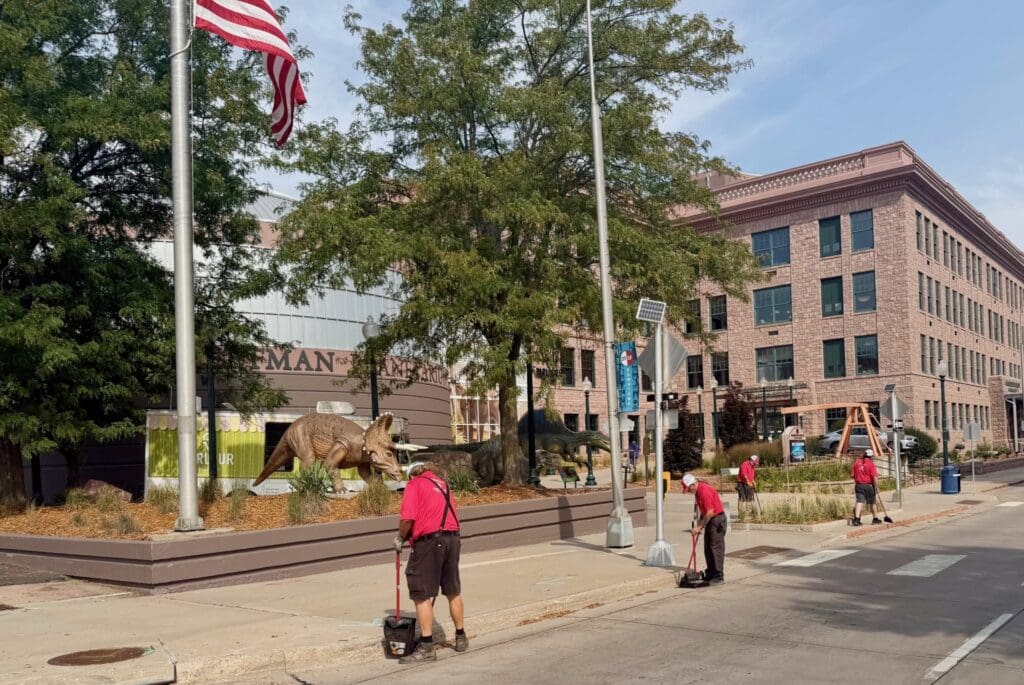
When something needs attention downtown — a cleanup, a safety concern, a visitor looking for directions or someone who might need help getting connected to services — police Sgt. Jason Montgomery increasingly knows who else might be nearby.
The Downtown Sioux Falls Inc. ambassadors.
“They’re a set of human eyes and ears,” said Montgomery of the Sioux Falls Police Department. “I’m not looking at a camera to find someone. You just ask them.”

That street-level presence has become one of the clearest signs of how the ambassador program has grown.
Ambassadors are more accessible throughout downtown, more connected with law enforcement and service providers, and more active in the daily work that helps downtown feel clean, safe and welcoming.
“I think they’re more visible,” Montgomery said. “The cleanliness is on point. Two years ago, I worked with them a little bit, but they’re more ingrained, including at special events. I know they will be there. It’s a seamless transition between us and them. We all work hand in hand now.”
The numbers tell the same story.
Through Aug. 19, DTSF ambassadors had completed 82,786 tasks — already 27 percent more than the 65,376 tasks completed during all of 2025, with more than four months still remaining in the year.

The largest categories so far this year show the range of work involved: 25,651 bulk trash removals, 20,256 planters watered, 18,799 visitor interactions, 3,822 trash cans emptied and 3,716 instances of sidewalk gum power-washed.
For Downtown Sioux Falls Inc., the growth reflects a program that is proving well worth the investment.
A year ago, DTSF had five full-time ambassadors and two seasonal staff members. It has since expanded seasonal coverage and is preparing to hire a director of operations, bringing the team to six full-time employees.
The enhanced program has been supported by multiple funding sources: the city of Sioux Falls through its Community Partners Program, the Downtown Business Improvement District and growing private investment.
Last year, city funding for the ambassador program shifted from a subsidy agreement to a competitive request for proposals that resulted in Community Partners grants.
“The change pushed us to be more intentional about measuring our work and demonstrating its impact,” said Brandon Hanson, CEO of Downtown Sioux Falls Inc.

That shift also resulted in the largest city award DTSF has received for the program.
“Downtown is a big part of what makes Sioux Falls special, and helping strengthen programs that make it safer, more welcoming and easier to enjoy aligns with our priorities within the city’s Community Partners program,” said Mayor Christine Erickson, who noted that the city is proud to support the ambassadors.
“Our support has helped the ambassador program grow and make an even bigger impact, and that benefits everyone who spends time downtown. And while every neighborhood in Sioux Falls matters, keeping our downtown strong lifts the whole city.”
The Business Improvement District remains another critical part of the model, with downtown property owners collectively investing in services that benefit the entire district.
Avera Health also provided support this year that directly funded an additional seasonal ambassador and expanded training and safety efforts.
“Avera is proud to be a part of downtown Sioux Falls,” said Micki Lundin, director of community partnerships for the health system. “The ambassadors help create a clean, safe and welcoming environment, while connecting people with assistance and resources when they need it. Their work reflects the spirit of caring for our neighbors.”
The work is wide-ranging – from cleaner sidewalks, watered planters, removed trash to a friendly person offering directions or recommendations.

And sometimes, it can be life-changing.
Ambassadors work directly with people experiencing homelessness, often providing assistance or connecting someone with resources without requiring a police response. They address graffiti and maintenance issues that otherwise could require involvement from property owners, city staff or law enforcement. And they serve as a front-line visitor service throughout downtown.
For Hanson, that is what makes the program more than a list of completed tasks.
“These are all economic development tools,” he said.
“A clean, active and welcoming downtown supports visitor traffic and spending, protects property investment and contributes to a strong tax base.”
From a board perspective, the ambassador program has become an increasingly important part of DTSF’s work.
“The ambassador program has been a huge value-add to the DTSF service offerings,” said James Krueger, BID board chair. “They are on the front lines keeping the DTSF area clean and acting as friendly faces to talk with and point visitors in the right direction. Having a friendly face to help out really goes a long way with enhancing the downtown experience.”
They also are a resource for businesses and property owners when nonemergency issues arise involving people downtown who may need assistance.
“In place of police being the only option, ambassadors are trained to deal with the transient population in nonemergency situations,” Krueger said. “This is a huge deal for businesses downtown and a huge benefit for those owners.”

Krueger said the program has become an emerging priority for the DTSF board, especially after seeing its early success. Allocating appropriate resources was an emphasis during the budgeting process.
“The ambassadors have become the heart of the DTSF program,” he said. “They are the boots on the ground and the faces the DTSF visitors see each day. So far, this program has been wildly successful and has exceeded any expectations we’ve had.”
The data is helping make that impact more concrete, he added.
“I’m a big data guy and love when you can make business decisions off of real, relevant data,” Krueger said.
“The DTSF crew has done an amazing job using software to track where ambassadors spend their time and where they are called to property-/location-wise. Property owners have been floored when they see the heat mapping associated with their properties and the amount of requests the ambassadors have helped with.”
Montgomery sees the impact from another angle.
In some cases, officers have called DTSF ambassadors when items such as garbage, blankets or mattresses are left in public spaces, and the ambassadors have responded quickly.
“I could call another city department, but the ambassadors are right there and get it done super-fast,” he said. “They’re fantastic.”
The partnership also has grown among law enforcement, DTSF ambassadors and service providers working with people experiencing homelessness or other challenges downtown.
“The working relationships we have with these entities have only strengthened our bonds,” Montgomery said. “The resources available now have totally changed the game for our homeless population, so it’s been great collaboration between the various entities.”
As downtown continues to grow, DTSF leaders are looking at how the ambassador program can scale with it. That means focusing on employee retention, better equipment, stronger systems and data, continued conversations with the city and property owners, updates to the BID ordinance and better education so those investing in the program understand the services available and how to access them.

There also have been ongoing discussions about eventually expanding the district eastward. While that may still be years away, Hanson said DTSF needs to build the structure now that would allow services to grow with downtown.
“The bigger story from the past year is the model behind the program: city investment, property owner support and emerging private investment working together to provide shared services with a return that extends well beyond downtown,” he said.
For Krueger, the ambassador program also helps broaden how people understand DTSF’s work.
“Sometimes, people still only associate DTSF with flowerpots and events,” he said. “The ambassador program showcases some of the deeper services that play a big role in keeping downtown the amazing place we all love. Services we don’t think about like trash collection, graffiti removal, scraping gum off sidewalks, street outreach — things that create a great first impression for everyone.”
And for Montgomery, the value is visible in the working relationship that now exists downtown every day.
“Just personally, I love working with them,” he said. “They’re good folks, and I think it’s a great partnership between our city and them, and I look forward to working with them in the future.”